US Sweepstakes Slots for Real Money: Top Casinos and Payouts
 Available in US
Expert guide to legal sweeps casinos, real money redemption process, RTP analysis, and responsible gaming across 45+ US states.

Sweepstakes Slots in 2026: What Matters Before You Play
- Sweepstakes casinos generated $10.6 billion in gross revenue in 2024, with the industry growing 60-70 percent annually since 2020—but California and New York bans eliminated roughly 20 percent of the market heading into 2026.
- The dual-currency model separates Gold Coins (entertainment only) from Sweeps Coins (redeemable at 1 SC = $1 after 1x playthrough)—free SC available through daily logins and mail-in requests makes the "no purchase necessary" element real.
- Nine states now ban or heavily restrict sweepstakes casinos: CA, NY, WA, MT, TN, CT, NJ, DE, NV, and ID—verify legal status before signing up.
- Tax obligations apply: operators issue Form 1099-MISC at $600, federal withholding kicks in at $5,000, and all winnings must be reported regardless of amount.
- Eight percent of US adults show problematic gambling behavior—set deposit limits and treat play as entertainment with fixed costs, not income potential.
Sweepstakes casinos generated over $10.6 billion in gross revenue in 2024, yet most Americans still conflate them with traditional online casinos or social gaming apps. The distinction matters. US sweepstakes slots real money platforms operate under a dual-currency model that sidesteps gambling statutes in more than forty states, letting players spin reels for actual cash prizes without placing a single wager in the legal sense. If that sounds like semantic gymnastics, you're not alone—but the mechanics hold up under scrutiny, and the payouts are real enough to have triggered a regulatory backlash across multiple states.
The industry's growth trajectory tells much of the story. Between 2020 and 2024, sweepstakes casinos expanded at a compound annual growth rate of 60 to 70 percent, outpacing nearly every segment of the US gaming industry. Net revenue—the money operators actually retain after paying out prizes—nearly doubled from $1.9 billion in 2023 to $3.4 billion in 2024. That kind of momentum attracts both players seeking accessible casino-style entertainment and regulators concerned about an industry operating largely outside traditional oversight frameworks.
This guide exists because the sweepstakes casino landscape shifted dramatically heading into 2026. California banned the model outright with AB 831, effective January 1, eliminating roughly 17 to 20 percent of the national market overnight. New York followed suit. Montana criminalized unlicensed online gaming with penalties up to ten years in prison. Meanwhile, dozens of platforms continue operating legally in the remaining states, processing millions in prize redemptions while state legislatures debate whether to regulate, restrict, or leave things alone.
What follows is an analysis of how sweepstakes slots actually work, which platforms pay reliably, what the legal landscape looks like state by state, and how players can navigate tax obligations and responsible gambling considerations. The focus is on verified data from primary sources—state attorney general offices, gaming commission reports, and regulatory filings—rather than marketing copy from operators with obvious incentives. Whether you're deciding if sweepstakes casinos are worth your time or trying to understand how a $10 billion industry operates in a regulatory gray zone, the answers are here.
Top Sweepstakes Casinos 2026
Evaluating sweepstakes casinos requires looking beyond welcome bonuses to factors that affect long-term player experience: payout speed, RTP transparency, game selection, and track record with state regulators. The platforms below have maintained consistent operations through the 2025-2026 regulatory shake-up and process redemptions reliably in states where they remain legal.
| Casino | Welcome Bonus | Min Redemption | Payout Speed | RTP Transparency | Game Count |
|---|---|---|---|---|---|
| Stake.us | 250,000 GC + 25 SC | 50 SC | 1-3 days | High (97%+ configs) | 500+ |
| WOW Vegas | 300,000 GC + 30 SC | 100 SC | 2-5 days | Medium | 700+ |
| Pulsz Casino | 367,000 GC + 32.3 SC | 100 SC | 1-5 days | Medium | 400+ |
| McLuck Casino | 57,500 GC + 27.5 SC | 50 SC | 1-3 days | Medium | 350+ |
| Fortune Coins | 140,000 GC + 500 SC | 50 SC | 2-5 days | Medium | 200+ |
Stake.us leads on RTP transparency, openly using high-return configurations from providers like Pragmatic Play. Their minimum redemption threshold of 50 SC (equivalent to $50 in prize value) is among the lowest in the industry, and their crypto payout option accelerates withdrawals for players who prefer Bitcoin or Ethereum. The platform's Telegram drops and regular rakeback promotions add ongoing value beyond the welcome package.
WOW Vegas offers the largest game library among major sweepstakes platforms, with over 700 titles spanning classic slots, Megaways variants, and exclusive releases from providers including Betsoft and Relax Gaming. Their payout speed varies more than competitors—PayPal and bank transfers typically clear within two to five days, while mail checks can extend beyond a week. The welcome bonus includes both GC for entertainment play and SC for prize-eligible sessions.
Pulsz Casino has built a reputation for aggressive promotional campaigns, including purchase bonuses that occasionally double or triple standard rates during promotional windows. Their 32.3 SC welcome bonus sits at the higher end of industry norms, though minimum purchase requirements apply. The platform's jackpot network connects multiple progressive slots with prize pools that have reached six figures.
McLuck Casino targets mobile-first players with a streamlined app experience and competitive daily login bonuses. Their referral program pays both the referrer and the new player, creating network effects that have fueled rapid growth through 2025. The 50 SC minimum redemption matches Stake.us as one of the most accessible thresholds in the market.
Fortune Coins distinguishes itself with an unusually generous 500 SC welcome offer, though playthrough requirements apply before redemption. The platform's smaller game library—around 200 titles—focuses on quality over quantity, with curated selections from established providers. Their social features, including leaderboards and community challenges, appeal to players who want engagement beyond solo spinning.
A note on selection criteria: these rankings exclude platforms facing active enforcement actions, those that have ceased operations in multiple states during the 2025-2026 regulatory wave, or operators with documented payout delays exceeding industry norms. The sweepstakes casino market is volatile—platforms that operate smoothly today may face restrictions tomorrow as state legislatures continue evaluating the model.
Interactive Tool
Net Revenue Growth Rate, and CT Average Deposit
Calculate the exact percentage behind "nearly doubled" net revenue, and the average deposit per Connecticut customer from the High 5 Games settlement.
Exact Growth Rate
-
-
2023 Net Revenue
-
2024 Net Revenue
-
Absolute Growth
-
What this guide describes qualitatively without the exact number: "Net revenue... nearly doubled from $1.9 billion in 2023 to $3.4 billion in 2024." The precise percentage is never calculated — it's +78.9%, close to but not quite double.
Average Deposit Per Customer
-
-
Total Deposits
-
Customers
-
Per Month (25mo)
-
What this guide gives as a total and a headcount without the average: "1,065 Connecticut customers had deposited $3.1 million over 25 months." The per-customer average is never calculated — it's $2,910.80 total, roughly $116.43 per month.
How Sweepstakes Casinos Work
The sweepstakes casino model exists because of a specific legal architecture designed to separate "gambling" from "promotional sweepstakes." Traditional gambling requires three elements under most state laws: consideration (payment), chance, and prize. Remove any one element, and the activity no longer qualifies as gambling in the statutory sense. Sweepstakes casinos attack the consideration element by ensuring players never technically purchase chances to win—they purchase virtual currency for entertainment, and receive sweepstakes entries as a bonus.
This framework has deep roots in American promotional law. The same logic allows cereal companies to run prize drawings without being classified as lotteries: entries are free, even if people can purchase products that include entry codes. Sweepstakes casinos extend this principle to casino-style gameplay, wrapping slot spins and table games in a dual-currency wrapper that satisfies legal requirements while delivering an experience functionally identical to online gambling.
The American Gaming Association has noted the tensions inherent in this approach. Their policy assessment states that sweepstakes casinos operate using a dual-currency system specifically to avoid licensing and regulation that would otherwise apply to online casinos. Whether this represents innovation or evasion depends on your perspective, but the legal analysis remains consistent: as long as the model maintains free-entry pathways and separates currency purchase from prize eligibility, it operates within the letter of sweepstakes law in most jurisdictions.
Understanding the mechanics requires distinguishing between the two currency types, examining how each flows through the system, and recognizing why the "no purchase necessary" element isn't merely fine print—it's the structural foundation that makes the entire model legally viable.
The Dual-Currency System
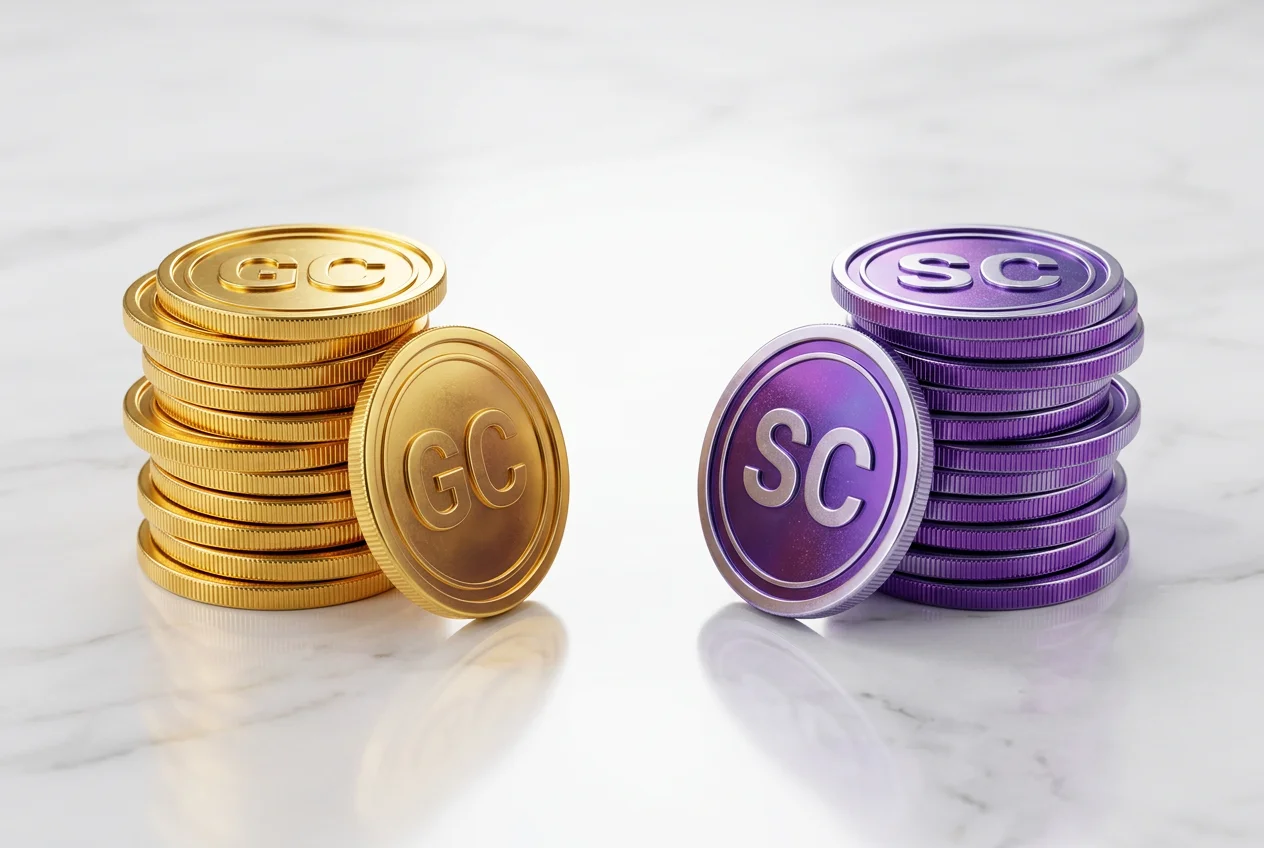
Every sweepstakes casino operates on two parallel currencies: Gold Coins (GC) for pure entertainment and Sweeps Coins (SC) for prize-eligible play. The distinction is absolute. Gold Coins have no cash value whatsoever—they exist solely for gameplay enjoyment and cannot be redeemed, transferred, or converted. Sweeps Coins, conversely, function as promotional entries that can be exchanged for cash prizes after meeting playthrough requirements.
When players purchase a Gold Coin package—say, 100,000 GC for $9.99—they receive Sweeps Coins as a free bonus included with the purchase. The legal framing is critical: the player bought entertainment currency and received sweepstakes entries at no additional cost. This structure mirrors how a soft drink company might sell beverages that include sweepstakes codes on the bottle cap. You purchased the drink; the entry came free.
The ratio between purchased GC and bonus SC varies by platform and promotional period. Standard packages might include 10,000 GC plus 10 SC per dollar spent, while promotional offers can multiply the SC component by two or three times. This variability makes direct price comparison between platforms tricky—a $20 purchase might yield vastly different SC amounts depending on timing and promotional codes.
For context on market scale: the broader social casino market—which includes platforms that offer only Gold Coin-style entertainment currency with no prize redemption—generated approximately $7.1 billion in gross revenue in 2024. Sweepstakes casinos have carved out a distinct segment by adding the prize-redemption layer that social casinos lack, driving the rapid growth that attracted regulatory attention.
Gold Coins vs Sweeps Coins
| Attribute | Gold Coins (GC) | Sweeps Coins (SC) |
|---|---|---|
| Cash Value | None | Redeemable (typically 1 SC = $1) |
| How Obtained | Purchased, daily login, promotions | Bonus with GC purchase, mail-in, promotions |
| Gameplay | Full game library access | Full game library access |
| Winnings | More GC (no cash value) | More SC (redeemable for prizes) |
| Transfer/Sale | Prohibited | Prohibited |
| Playthrough Required | N/A | Typically 1x before redemption |
The gameplay experience between GC and SC modes is mechanically identical. The same slot games run on the same random number generators with the same return-to-player percentages. What differs is the outcome: GC wins generate more entertainment currency, while SC wins generate prize-eligible entries. Players often switch between modes depending on their goals—using GC for extended entertainment sessions and SC when actively pursuing redeemable winnings.
Most platforms maintain unified balances across both currency types, displaying them side-by-side in the player interface. This transparency helps players track their prize-eligible SC separately from their entertainment GC, avoiding confusion about which funds can eventually become cash.
No Purchase Necessary
The "no purchase necessary" element isn't optional marketing language—it's the legal cornerstone that distinguishes sweepstakes from gambling. For the model to work, players must have a free pathway to obtain Sweeps Coins without ever spending money. Platforms implement this requirement through several mechanisms.
Mail-in requests represent the traditional alternative method of entry (AMOE). Players can send a handwritten request, typically a 3x5 index card with their name, address, and account information, to receive free SC credits. The specific requirements—card size, permitted mailing frequency, processing address—vary by platform and are detailed in each casino's official rules. Most allow one or two requests per week with waiting periods of several days for credit.
Daily login bonuses provide another free SC pathway. Simply accessing your account each day triggers a small SC credit, usually between 0.30 and 1.00 SC depending on the platform and any consecutive-day multipliers. Over a month of consistent logins, these accumulate into meaningful prize-eligible balances without any purchase.
Social media promotions add a third free-entry channel. Platforms regularly distribute bonus codes through Twitter, Facebook, and Telegram that credit SC to accounts. These drops range from 1-5 SC for routine promotions to 50+ SC for major events or milestones. Active community participation can substantially reduce or eliminate the need for purchases.
The existence of these pathways matters beyond individual player economics. They establish the legal foundation that prevents sweepstakes casinos from being classified as gambling operations. Remove the free-entry options, and the consideration element returns—transforming promotional sweepstakes back into a lottery or gambling operation subject to entirely different regulatory frameworks.
Legal Status of Sweepstakes Casinos in the US
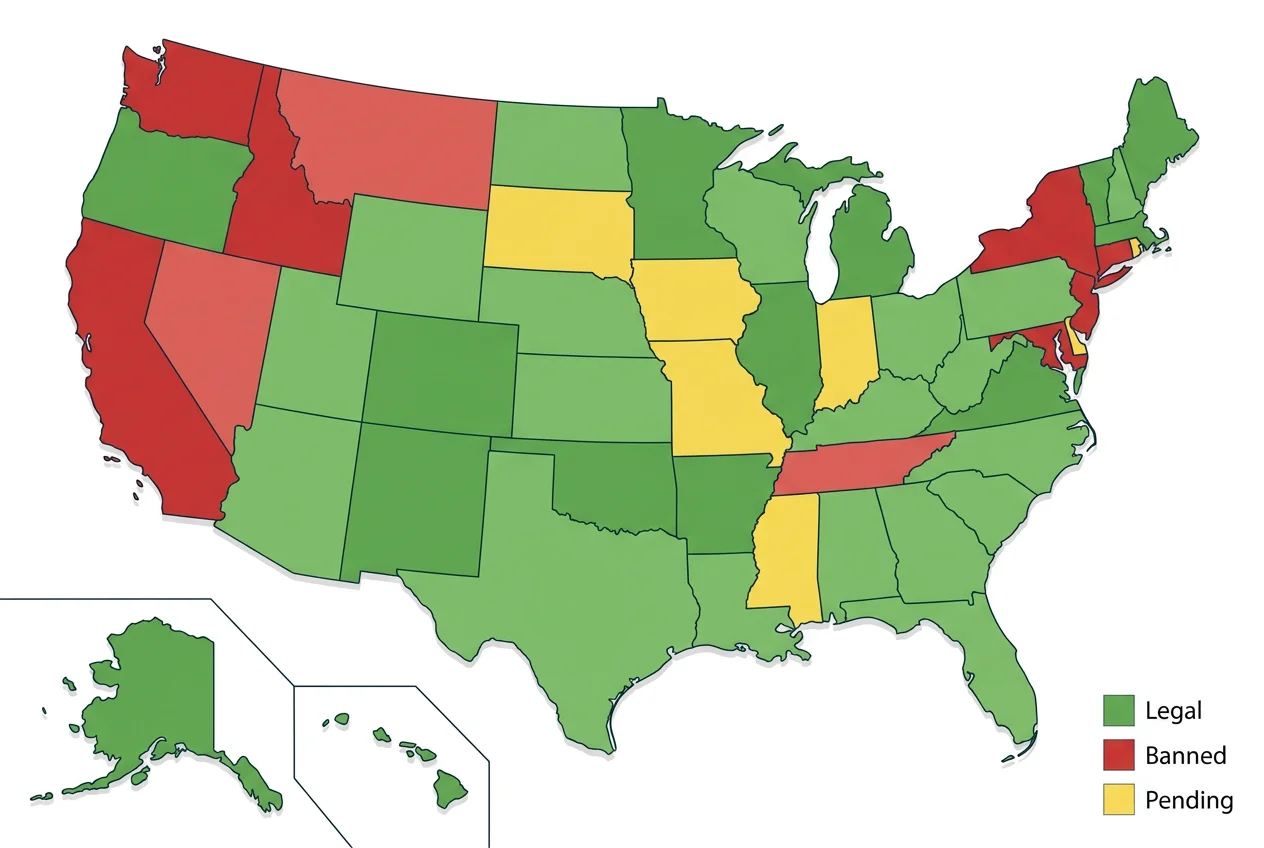
The legal landscape for sweepstakes casinos fractured dramatically between 2025 and 2026. What had been an industry operating with minimal regulatory friction across nearly all fifty states now faces outright bans in nine jurisdictions, active enforcement in several more, and pending legislation that could reshape market access within months. Understanding where sweepstakes casinos remain legal—and where they've been prohibited—requires tracking both enacted laws and ongoing regulatory actions.
The core legal question centers on whether sweepstakes casinos satisfy state gambling statutes or fall under promotional sweepstakes exemptions. Most states define gambling as requiring consideration (payment), chance, and prize. By structuring transactions as virtual currency purchases with bonus sweepstakes entries, operators argue they've eliminated the consideration element. This reasoning has held up in most jurisdictions, but several states have concluded that the functional reality—people spending money to play slot machines and redeeming winnings for cash—constitutes gambling regardless of the technical structure.
Where Sweepstakes Casinos Are Legal
As of January 2026, sweepstakes casinos operate legally in approximately forty-one states. The "operate legally" designation requires some nuance: these are states that haven't enacted specific prohibitions and where attorney general offices haven't taken public enforcement positions against the sweepstakes model. This doesn't necessarily mean states have affirmatively blessed the model—many simply haven't addressed it.
States with active sweepstakes casino operations and no pending enforcement include Texas, Florida, Illinois, Pennsylvania, Ohio, Michigan, and Georgia. These represent major population centers that collectively account for a significant portion of industry revenue. Pennsylvania and Michigan have legalized traditional iGaming alongside permitting sweepstakes operations, creating markets where both regulated and sweepstakes casinos coexist.
Arizona, Colorado, and Virginia operate in a similar ambiguous space: sweepstakes casinos accept players without apparent interference, but no formal regulatory framework exists. Players in these states can access platforms, make purchases, and redeem prizes, but they do so without the consumer protections that accompany licensed gambling operations.
Several states maintain age restrictions that differ from standard sweepstakes requirements. While most platforms set a base eligibility of 18 years, some states where traditional gambling begins at 21 may require sweepstakes casinos to match that threshold. Players should verify platform terms for their specific jurisdiction.
Banned States in 2026
Nine states have now explicitly prohibited sweepstakes casinos or taken enforcement actions that effectively ban operations:
California: AB 831 passed unanimously—36-0 in the Senate and 63-0 in the Assembly—and took effect January 1, 2026. The legislation classifies sweepstakes casinos as illegal gambling operations. California represented an estimated 17 to 20 percent of the national market, with projected 2025 sales of $2.42 billion before the ban.
New York: Governor Hochul signed S.5935A into law in December 2025 after the state attorney general had already sent cease-and-desist letters to 26 platforms in June. Penalties for operating illegal sweepstakes casinos in New York now range from $10,000 to $100,000 per violation. Senator Joseph P. Addabbo, Jr., who championed the bill, stated the reasoning bluntly: "If a game on your phone or computer looks like a casino game, acts like a casino game, and pays out real money winnings like a casino game, then it is a casino gambling game."
Montana: SB 555 criminalized unlicensed online gaming with severe penalties: a felony conviction carrying up to ten years in prison and $50,000 in fines. The law targets operators rather than players, but its severity signals Montana's zero-tolerance approach to unregulated gaming.
Washington State: Long hostile to sweepstakes casinos, Washington has been the venue for major class-action litigation. The DoubleDown/IGT settlement reached $415 million, and High 5 Games faced a $24.9 million jury verdict in February 2025.
Tennessee: The state attorney general sent cease-and-desist letters to nearly 40 sweepstakes platforms in late 2025. Attorney General Jonathan Skrmetti warned that sweepstakes casinos work hard to appear legitimate but avoid oversight that could ensure honesty or fairness.
Connecticut, New Jersey, Delaware, Nevada, and Idaho round out the restricted jurisdictions, each with varying legal frameworks that preclude sweepstakes casino operations. Nevada's prohibition is particularly notable given its status as a gambling hub—the state's strict licensing regime leaves no room for unregulated alternatives.
High 5 Games' Connecticut settlement illustrates enforcement realities. The company paid $1.5 million—$643,000 in restitution and $800,000 in penalties—after operating without proper licensing. Data from the settlement revealed that 1,065 Connecticut customers had deposited $3.1 million over 25 months, including 108 players who were on the state's voluntary self-exclusion list.
Pending Legislation
The legislative momentum against sweepstakes casinos continues building. Multiple states introduced bills during their 2025-2026 sessions that would restrict or regulate the industry. While not all will pass, the trend suggests the permissive regulatory environment is narrowing.
Massachusetts is evaluating sweepstakes casino legislation amid broader discussions about expanded gaming. The state's experience with legal sports betting has provided lawmakers a framework for thinking about regulation versus prohibition. Committee hearings have featured testimony from both industry advocates and problem gambling researchers.
Ohio's gaming commission has signaled interest in clarifying the status of sweepstakes casinos, potentially through regulation rather than outright prohibition. The state's substantial land-based and online gambling infrastructure creates stakeholders on multiple sides of the debate.
Several states have taken a "study first" approach, commissioning reports on sweepstakes casino activity before proposing legislation. These studies typically examine revenue flows, player demographics, consumer complaints, and the adequacy of existing consumer protections. The resulting data often becomes the foundation for subsequent legislative proposals.
The Social Gaming Leadership Alliance (SGLA), representing major sweepstakes operators, has pivoted toward advocating for regulation rather than opposing all oversight. Their position—articulated in response to California's ban—calls for consumer-focused regulation that maintains market access while addressing legitimate concerns about player protection. Whether this approach gains traction remains uncertain given the legislative success of prohibition efforts.
Redeeming Sweeps Coins for Real Money
The prize redemption process transforms Sweeps Coins from promotional entries into actual cash. This is where sweepstakes casinos deliver on their core value proposition: gameplay that looks and feels like online gambling, with prizes that convert to real money in your bank account or crypto wallet. Understanding how redemption works—including verification requirements, playthrough conditions, and tax implications—helps players navigate the process efficiently.
The Redemption Process
Converting SC to cash prizes follows a standard sequence across most sweepstakes platforms. First, players must complete identity verification if they haven't already done so during account creation. This Know Your Customer (KYC) process typically requires government-issued photo identification, proof of address (utility bill or bank statement), and sometimes a selfie matching the ID photo. Verification is usually a one-time requirement.
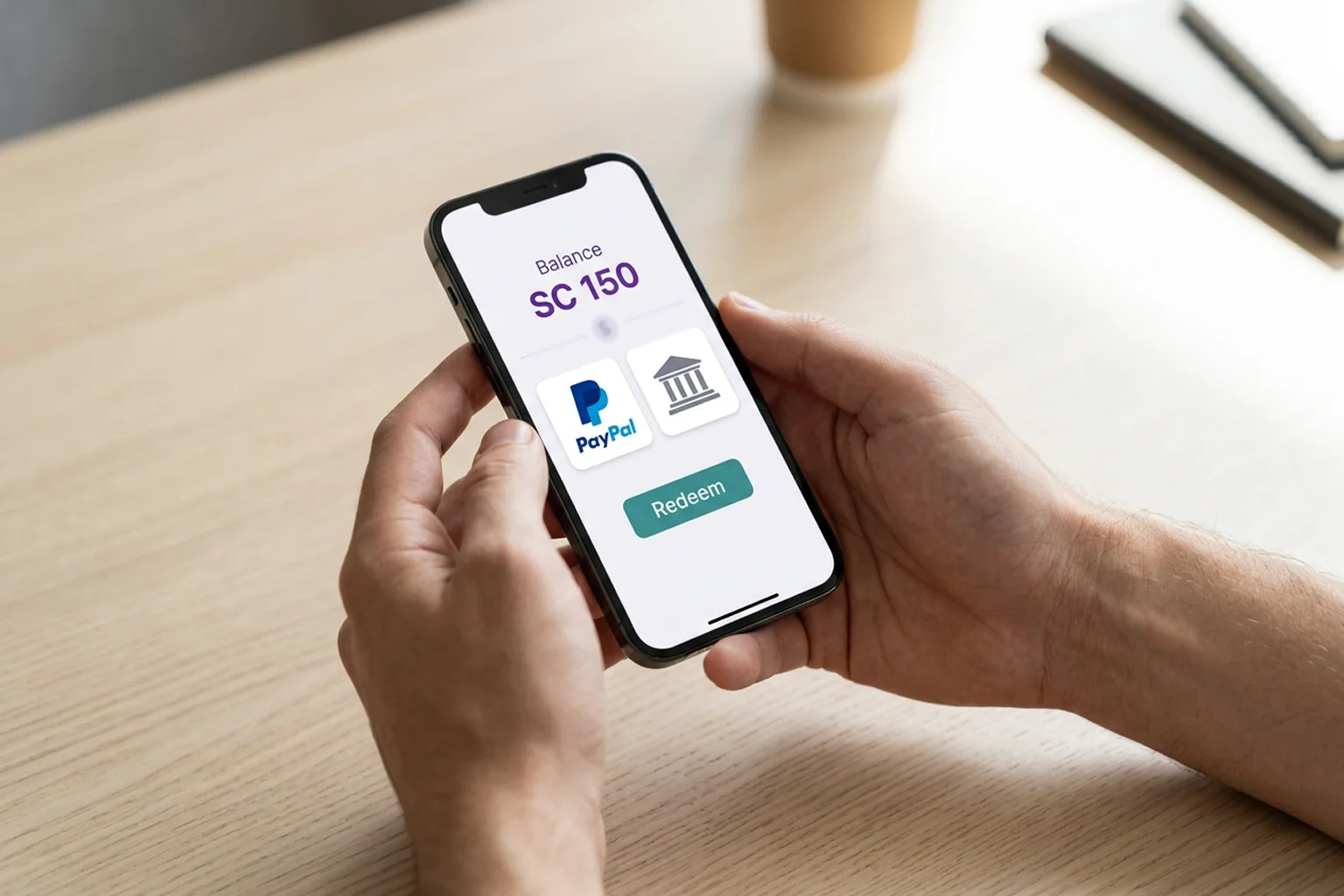
Once verified, players navigate to the redemption section of their account and select the amount of SC to convert. Most platforms offer a 1:1 exchange rate—one SC equals one dollar in prize value—though minimum and maximum redemption thresholds apply. Minimum redemptions typically range from 50 to 100 SC depending on the platform, while maximums may cap daily or weekly withdrawal amounts.
Payment method selection follows. Common options include PayPal, direct bank transfer via ACH, wire transfer for larger amounts, and cryptocurrency (primarily Bitcoin, Ethereum, and Litecoin). Some platforms still offer mailed checks, though processing times extend significantly. Each method carries different processing windows: crypto often clears within hours, PayPal within one to three days, bank transfers within three to five days, and checks potentially extending to two weeks.
After submission, redemption requests enter a review queue. Platforms conduct anti-fraud checks and verify that playthrough requirements have been met before approving payouts. First-time redemptions face additional scrutiny and may require supplemental documentation. Subsequent redemptions from established accounts typically process faster.
Playthrough Requirements
Before SC can be redeemed, players must "play through" the balance—meaning the SC must be wagered a specified number of times. Sweepstakes casinos generally impose a 1x playthrough requirement, considerably more player-friendly than the 25x to 50x rollover demands common at traditional online casinos. A 1x requirement means 100 SC must be wagered once (totaling $100 in wagers) before redemption, regardless of whether individual spins win or lose.
The playthrough calculation tracks cumulative wagering against the SC balance. If a player receives 100 SC and immediately wagers 100 SC total across multiple slots (winning some, losing some, ending with 87 SC), the playthrough requirement is satisfied. The remaining 87 SC becomes prize-eligible without additional wagering requirements.
Some platforms implement tiered playthrough based on how SC were obtained. Bonus SC from promotional codes might carry higher playthrough than SC purchased as part of GC bundles. Mail-in SC—obtained through the free AMOE pathway—sometimes faces different requirements than purchased SC. These variations appear in each platform's terms of service.
Not all gameplay counts equally toward playthrough. Slots typically contribute 100 percent of wagers, table games might contribute 10 to 50 percent, and some specialty games may be excluded entirely. Players focused on meeting playthrough efficiently should verify contribution rates before selecting games.
Tax Obligations
Sweepstakes casino winnings are taxable income under US federal law. The IRS treats prize redemptions the same as other gambling winnings: they must be reported as income regardless of amount, and specific thresholds trigger additional reporting and withholding requirements.
Sweepstakes operators typically issue IRS Form 1099-MISC to players when cumulative annual redemptions reach $600 or more. This form documents the prize value paid and is sent to both the player and the IRS. Players who don't receive a 1099-MISC are still obligated to report winnings; the form simply creates a paper trail that makes underreporting more detectable.
Federal tax withholding kicks in at $5,000 in net winnings. At this threshold, platforms must withhold 24 percent for federal taxes before disbursing the remaining prize amount. Some states impose additional withholding requirements for prizes paid to their residents.
Players can potentially offset winnings with gambling losses, but only if they itemize deductions rather than taking the standard deduction—and losses can only offset winnings, not reduce other income. Maintaining records of both wins and losses becomes important for players with significant sweepstakes activity. This includes tracking purchase amounts (which may be deductible as gambling expenses), redemption amounts, and net results across platforms.
State tax obligations vary. Some states with income taxes follow federal treatment; others exclude gambling winnings or apply different rates. Players in states without income tax (Texas, Florida, Nevada, etc.) face only federal obligations. Consulting a tax professional makes sense for players with substantial redemptions, particularly those navigating multi-state residency situations.
Sweepstakes Slots Guide
Slot games dominate sweepstakes casino libraries, comprising 80 to 90 percent of available titles at most platforms. These aren't simplified social games but full implementations of popular online slots from established providers—complete with bonus features, progressive jackpots, and configurable return-to-player percentages. Understanding RTP, volatility, and how sweepstakes casinos select their slot configurations helps players make informed decisions about where to play.
Understanding RTP
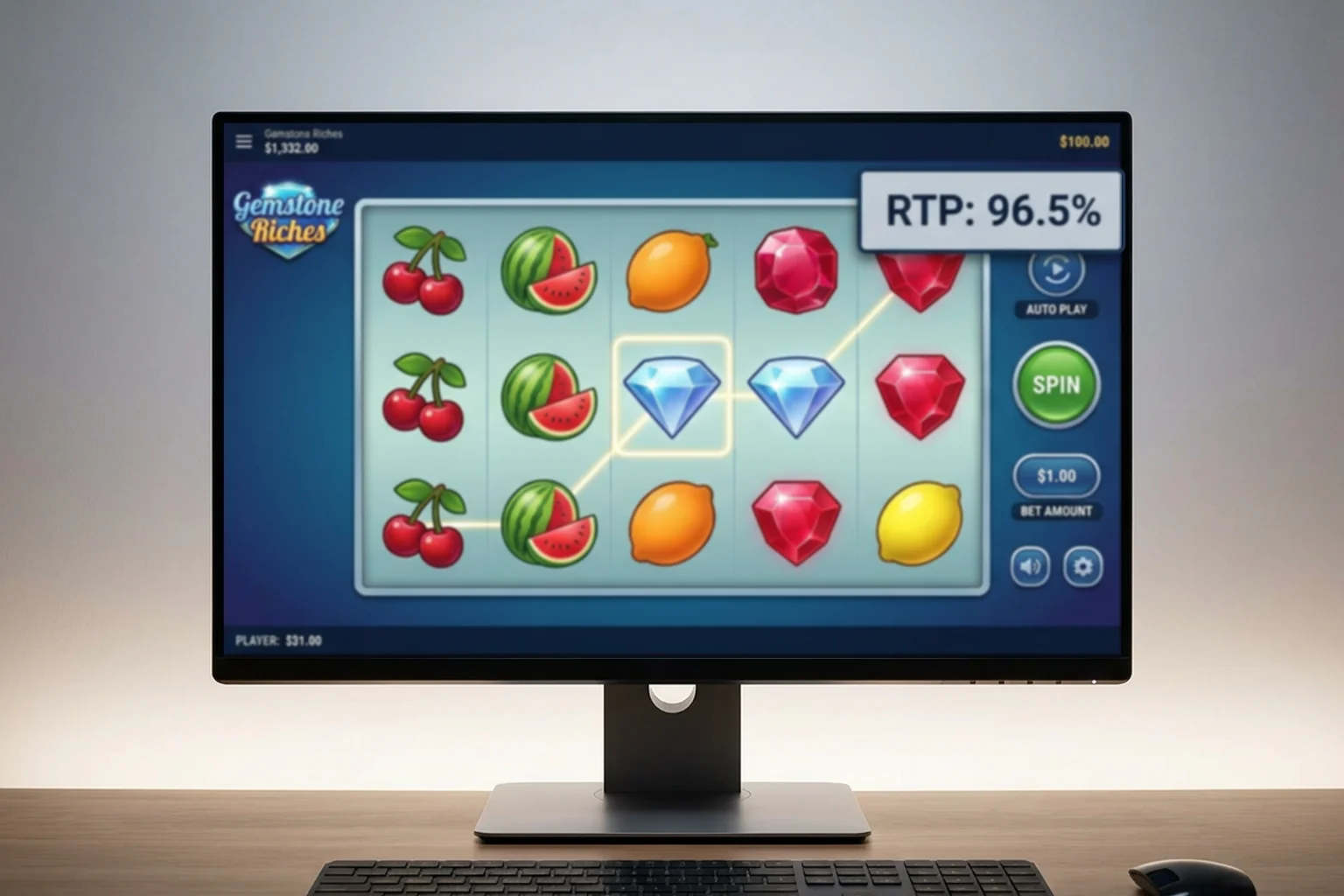
Return-to-player (RTP) measures the theoretical percentage of wagered money a slot returns to players over millions of spins. A 96 percent RTP means that, statistically, players receive $96 back for every $100 wagered. The remaining $4 represents the house edge. This is a long-term mathematical average, not a guarantee for any individual session—variance ensures that actual results fluctuate widely in shorter timeframes.
Online slots typically offer RTPs around 96 percent, significantly higher than land-based casino slots that commonly run between 91 and 93 percent. The difference reflects operational realities: online platforms face lower overhead costs and can afford to return more to players while maintaining profitability. For sweepstakes slots real money players, this gap translates to measurably better expected outcomes compared to physical casinos.
Here's the critical detail most players miss: the same slot game can be configured at multiple RTP settings. Analysis of available configurations shows that Phantom of the Opera, for example, is offered at eight different RTP levels: 85 percent, 87.5 percent, 90 percent, 92.5 percent, 94 percent, 95 percent, 97.4 percent, and 98 percent. Casinos—including sweepstakes operators—choose which configuration to deploy. A player spinning the "same" slot at two different platforms might face a thirteen percentage point difference in expected return.
This configurability matters enormously for informed play. Two sweepstakes casinos might offer identical game libraries from the same providers yet deliver fundamentally different player experiences based on which RTP configurations they've selected. Platforms that disclose their RTP configurations or commit to using high-return versions provide transparency that benefits players.
High RTP Slots at Sweepstakes Casinos
Several sweepstakes casinos have built reputations for deploying high-RTP configurations. Stake.us has been particularly transparent about using 97 percent and above settings for many popular titles, a positioning that differentiates them from competitors running more conservative configurations. This commitment costs the platform margin but builds player trust and loyalty.
When evaluating slots for RTP, consider titles from providers known for high-return options:
- Pragmatic Play: Offers multiple RTP tiers; look for platforms deploying the 96.5 percent and above configurations. Popular titles include Sweet Bonanza, Gates of Olympus, and Big Bass Bonanza.
- NetEnt: Classic slots like Starburst and Gonzo's Quest maintain competitive RTPs around 96 percent even in standard configurations.
- Relax Gaming: Known for Money Train series and Temple Tumble, with RTPs commonly above 96 percent.
- Push Gaming: Jammin' Jars and Razor Shark offer strong returns in most configurations.
Jackpot slots present a tradeoff. Progressive jackpot games typically run lower base RTPs because a portion of each wager funds the growing prize pool. A slot with a 94 percent base RTP might effectively return 96 percent or more once jackpot contributions are factored in, but that additional return is concentrated in rare jackpot wins rather than distributed across regular play. Players seeking consistent returns should focus on non-progressive high-RTP games; those chasing life-changing prizes accept lower base returns for jackpot potential.
Volatility—the variance in outcome distribution—complements RTP in evaluating slots. High-volatility games deliver larger but less frequent wins; low-volatility games produce smaller but more consistent returns. Both can have identical RTPs but feel dramatically different in actual play. Matching volatility preference to bankroll size and risk tolerance matters at least as much as chasing the highest possible RTP number.
Bonuses and Promotions
Sweepstakes casino promotional structures differ meaningfully from traditional online casino bonuses. There's no deposit match in the conventional sense because, legally, players aren't making deposits—they're purchasing virtual currency. What exists instead are GC packages with varying SC bonuses, daily rewards, referral incentives, and occasional promotional events that multiply standard ratios.
Welcome packages typically combine a large GC grant for entertainment play with a smaller SC allocation for prize-eligible sessions. A $20 first purchase might yield 200,000 GC plus 20 SC, with the SC portion carrying a 1x playthrough before redemption eligibility. These welcome offers represent the most favorable SC ratios available—subsequent purchases generally offer lower bonus rates unless promotional events are active.
Daily login bonuses provide consistent SC accumulation without purchases. Most platforms credit between 0.30 and 1.00 SC for each day of account access, with some implementing streak multipliers that increase daily grants for consecutive logins. A player logging in daily for a month might accumulate 15-30 SC through this mechanism alone, representing real prize value without any expenditure.
Referral programs create another SC pathway. Platforms typically reward both the referring player and the new signup with bonus SC once the new account meets certain activity thresholds (usually a first purchase). Referral bonuses range from 5-50 SC per successful signup, making active referrers a significant source of free prize-eligible play.
VIP and loyalty programs tier players by activity level, offering progressively better SC ratios, exclusive bonuses, faster redemption processing, and dedicated account management. The mechanics mirror casino comp programs: frequent play earns status, and status unlocks better treatment. For regular players, VIP progression can substantially improve long-term value.
Purchase promotions occur regularly, particularly around holidays, sporting events, or platform milestones. These limited-time offers might double or triple the SC component of standard packages. Strategic players monitor promotional calendars and concentrate purchases during high-value windows rather than buying at standard rates.
A cautionary note on bonus expectations: sweepstakes casino promotional economics differ from traditional gambling bonuses because the underlying business model differs. Traditional casino bonuses often come with extractive playthrough requirements designed to reclaim bonus value before players can withdraw. Sweepstakes 1x playthrough is genuinely player-friendly by comparison, but the lower SC ratios on standard purchases reflect this more permissive structure. The value is real but shouldn't be confused with the inflated bonus numbers traditional casinos advertise.
Responsible Gambling
The accessibility that makes sweepstakes casinos attractive—no geographic restrictions in most states, easy signup, mobile-first interfaces—also removes friction that might otherwise moderate play. Traditional casinos impose implicit limits: travel time, operating hours, the social visibility of gambling. Online sweepstakes slots are available 24/7 from any smartphone, removing barriers that might naturally constrain engagement. This accessibility demands proportionally greater self-awareness about gambling behaviors.

National research paints a concerning picture. According to the National Council on Problem Gambling's NGAGE 3.0 Survey, approximately 8 percent of American adults—roughly 20 million people—experienced at least one indicator of problematic gambling behavior "many times" in the past year. An estimated 2.5 million adults likely meet criteria for gambling disorder, with another 5 to 8 million demonstrating problem gambling behaviors that fall short of clinical disorder thresholds.
The growth in gambling availability correlates with increased help-seeking. Since the Supreme Court's 2018 PASPA decision enabled sports betting expansion, call volume to the National Problem Gambling Helpline has increased by more than 150 percent. Text and chat support channels have seen even steeper growth as younger gamblers prefer digital communication. Yet awareness of available resources remains limited: only 36 percent of Americans have heard of the 1-800-GAMBLER helpline, though recognition rises to 59 percent among frequent gamblers who engage with seven or more betting types.
Lia Nower, Director of the Center for Gambling Studies at Rutgers University, has argued that the fragmented state regulatory approach leaves gaps in problem gambling infrastructure. Her assessment, delivered at a Harvard panel on gambling expansion: "We need a federal presence like we have for cigarettes, alcohol, and other forms of addiction."
Sweepstakes casinos face particular scrutiny because they operate largely outside regulatory frameworks that mandate responsible gambling protections. Licensed online casinos in states like New Jersey must implement deposit limits, loss limits, self-exclusion options, and fund problem gambling programs. Sweepstakes casinos may offer these tools voluntarily but aren't required to do so. The Connecticut settlement with High 5 Games revealed that 108 players on the state's voluntary self-exclusion list had still made deposits totaling $3.1 million—highlighting gaps in protection that regulated environments would address.
Players should proactively implement their own safeguards. Most sweepstakes platforms do offer deposit limits and session time reminders, even if not legally required. Setting hard spending caps before play begins—and treating those limits as non-negotiable—creates the friction that online accessibility removes. Treating sweepstakes play as entertainment with a fixed cost, rather than a revenue-generating activity, aligns expectations with statistical reality.
Resources for problem gambling support:
- National Problem Gambling Helpline: 1-800-522-4700 (available 24/7)
- NCPG Chat and Text Support: Text or chat at ncpgambling.org
- Gamblers Anonymous: ga.org for meeting schedules and resources
- State-specific helplines: Many states operate dedicated problem gambling support services
If gambling has stopped being entertainment—if losses are being chased, if play continues despite consequences, if time at sweepstakes casinos interferes with work or relationships—these represent signals that professional support may be warranted. The helpline exists specifically for these situations.
Frequently Asked Questions
Can you really win real money at sweepstakes casinos?
Yes. Sweeps Coins (SC) can be redeemed for cash prizes after meeting playthrough requirements—typically a 1x wagering threshold, meaning the SC must be bet once before becoming eligible for withdrawal. The standard exchange rate is 1 SC = $1, with minimum redemption thresholds usually between 50 and 100 SC depending on the platform. Sweepstakes casinos process redemptions via PayPal, bank transfer, cryptocurrency, or mailed checks. This isn't a technicality or marketing language: the industry paid out over $3.4 billion in net prizes in 2024 alone. The legal structure differs from traditional gambling—you're technically redeeming promotional entries rather than collecting gambling winnings—but the money arriving in your bank account is entirely real.
Are sweepstakes casinos legal in my state?
Sweepstakes casinos operate legally in approximately 41 US states as of January 2026. They are banned or face enforcement in California (AB 831, effective January 1, 2026), New York (S.5935A, signed December 2025), Washington, Montana (SB 555 imposes criminal penalties), Tennessee, Connecticut, New Jersey, Delaware, Nevada, and Idaho. The legal landscape is shifting rapidly—California and New York represented roughly 20 percent of the national market before their bans took effect. States without explicit prohibitions generally allow sweepstakes operations under promotional sweepstakes exemptions, though this doesn't mean they've affirmatively endorsed the model. Verify current legal status with individual platforms before creating an account, and be aware that today's legal state might face restrictions through future legislation.
Do you pay taxes on sweepstakes casino winnings?
Yes—sweepstakes winnings are taxable income under federal law. Operators are required to issue IRS Form 1099-MISC when your cumulative annual redemptions reach $600 or more. At the $5,000 threshold, platforms must withhold 24 percent for federal taxes before disbursing your prize. All winnings must be reported on your tax return regardless of whether you receive a 1099 form. You can potentially offset gambling winnings with documented gambling losses, but only if you itemize deductions rather than taking the standard deduction—and losses can only reduce gambling income, not other income. State tax obligations vary by jurisdiction; some states follow federal treatment while others exclude gambling winnings or apply different rates. Players in states without income tax face only federal obligations. Maintaining records of both wins and losses throughout the year simplifies tax filing.
Final Thoughts
Sweepstakes casinos occupy an unusual position in American gaming: a multi-billion dollar industry operating at the intersection of promotional law and gambling entertainment. The model works, at least in jurisdictions that haven't explicitly prohibited it. Players in 41 states can legally access hundreds of slot titles, accumulate prize-eligible Sweeps Coins, and redeem winnings for actual cash. The experience mirrors online gambling without technically crossing legal thresholds that would require state licensing.
The regulatory environment continues shifting. California's unanimous legislative vote to ban sweepstakes casinos—eliminating roughly a fifth of the national market—signals that the hands-off approach may be ending. New York's enforcement actions and Montana's severe criminal penalties reinforce this trend. Players considering sweepstakes casinos should verify current legal status in their state and understand that today's legal option might face restrictions tomorrow.
For those in legal states, the calculus involves weighing genuine entertainment value against real risks. On the positive side: higher RTPs than land-based casinos, accessible welcome bonuses, no travel required, cryptocurrency payout options, and genuine cash redemption. On the concerning side: limited regulatory oversight, variable consumer protections, potential for problematic gambling without the guardrails licensed operations must implement, and tax obligations that players must self-manage.
The statistics on problem gambling deserve attention. Eight percent of American adults experiencing problematic behavior, 2.5 million with gambling disorder, helpline volume up 150 percent since PASPA—these numbers represent real people, and sweepstakes casinos' easy accessibility compounds risk for susceptible individuals. The responsible approach treats sweepstakes play as entertainment with a predetermined cost, not as income potential. Setting limits before play, taking the playthrough math seriously, and monitoring one's relationship with the activity aren't optional add-ons—they're prerequisites for sustainable engagement.
This guide has covered the mechanics, the legal landscape, the redemption process, and the responsible gambling considerations. What remains is judgment about whether the sweepstakes casino model fits your entertainment preferences and risk tolerance. The information exists to support informed decisions; the decision itself remains yours.