Sweepstakes Casino Legal States in 2026: Access and Restrictions
 Available in US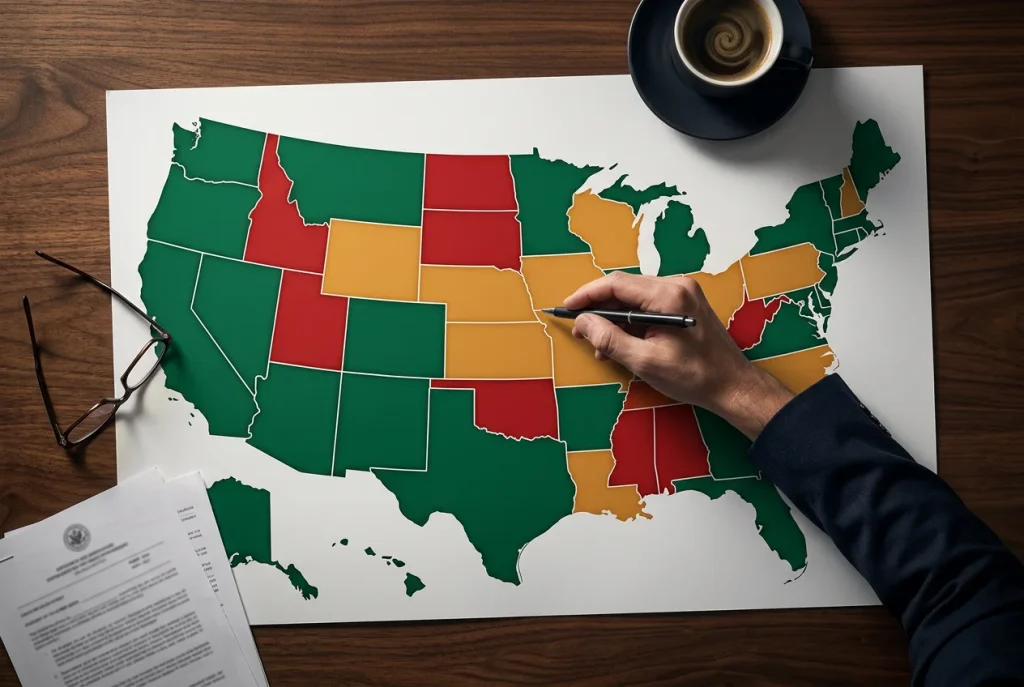
Six US states passed explicit sweepstakes casino bans during 2025, fundamentally reshaping the industry. The question “are sweepstakes casinos legal” no longer has a simple answer—it depends entirely on which state you’re in and whether your chosen platform has exited that market.
For years, sweepstakes casinos operated in a gray zone across most of the United States. The dual-currency model—separating entertainment coins from redeemable prize coins—allowed platforms to argue they didn’t constitute gambling under state laws. Most jurisdictions neither explicitly permitted nor prohibited these operations. Players could access platforms, purchase virtual currency, and redeem prizes without clear regulatory guidance one way or another.
That permissive uncertainty ended abruptly in 2025. California, home to roughly 17-20% of the US sweepstakes market, signed a comprehensive ban into law. New York followed with legislation targeting operators directly. Montana classified sweepstakes casino operation as a felony. The legislative cascade signaled a fundamental shift: states were no longer content to leave the industry in regulatory limbo.
Understanding sweepstakes casino legal states now requires tracking not just explicit bans but pending legislation, enforcement actions, and the evolving interpretations of gambling statutes that might not mention sweepstakes casinos by name. A platform accessible today might disappear tomorrow as regulatory pressure mounts.
This guide maps the current legal landscape as of 2026, covering every category of state status—from explicit bans with criminal penalties to states with active legislation under consideration. We examine how the major bans unfolded, which enforcement mechanisms regulators are deploying, and what the settlement record suggests about operator vulnerabilities. The goal is providing clear, current information so players understand their legal position before engaging with any sweepstakes platform.
2026 Legal Map: State-by-State Sweepstakes Restrictions
The sweepstakes casino legal map in 2026 looks dramatically different from just two years prior. What was once a nearly nationwide market with a few scattered restrictions has fractured into distinct zones: states with explicit bans, states with pending legislation, states actively enforcing existing gambling laws against sweepstakes operators, and states where platforms continue operating without specific regulatory address.
Nine states currently prohibit sweepstakes casino operations through either targeted legislation or application of existing gambling laws. California and New York represent the largest markets lost to the industry, their combined populations exceeding 60 million people. Washington State never permitted sweepstakes casinos and continues aggressive enforcement. Nevada’s strict gambling regulatory framework excludes sweepstakes operations. Idaho, Montana, Connecticut, New Jersey, and Delaware round out the explicitly restricted states.
The remaining 41 states and the District of Columbia permit sweepstakes casino access, though “permit” often means “haven’t prohibited” rather than “officially sanctioned.” Most of these jurisdictions lack specific sweepstakes casino regulations. Platforms operate under the assumption that their dual-currency model satisfies existing promotional sweepstakes laws. This assumption remains legally untested in many states.
State-level attitudes vary considerably even within the permitted category. Some states have gambling-friendly regulatory environments where sweepstakes operations face little scrutiny. Others have attorneys general who have expressed concerns but taken no formal action. A few have pending legislation that could quickly shift their status from permitted to banned if political momentum builds.
The California and New York bans merit particular attention because of their market impact. California alone represented an estimated 17-20% of the US sweepstakes market, with projected 2025 sales of $2.42 billion before the ban took effect. New York accounted for approximately $762 million in sweepstakes casino sales during 2024. Losing these states forced operators to recalibrate growth projections and geographic strategies.
For players, the legal landscape requires verification before play. Most platforms now implement geolocation technology that blocks access from banned states automatically. However, relying solely on platform restrictions isn’t advisable. Understanding your state’s actual legal status—and any pending changes—helps you make informed decisions about engagement. Some players have discovered mid-session that their state status changed, leaving them unable to access or redeem existing balances.
The 2026 landscape also reflects increased coordination between state regulators. Attorney general actions in one state often trigger similar reviews in others. Industry advocacy organizations tracking legislative activity note that bills restricting sweepstakes operations frequently reference language from California’s AB831 or New York’s S.5935A, suggesting a template approach to regulation is emerging.
Banned States: What Happened
The wave of sweepstakes casino bans that crested in 2025 didn’t emerge from nowhere. Each state that moved to prohibit these platforms did so through distinct legislative or regulatory pathways, responding to different pressures and concerns. Understanding what triggered each ban helps predict where similar action might follow.
California’s AB831 became the most consequential sweepstakes ban in industry history. The bill moved through the legislature with remarkable speed and near-unanimous support, passing the state Senate 36-0 and the Assembly 63-0. Governor Newsom signed it into law, with an effective date of January 1, 2026. The legislation explicitly classified sweepstakes casinos as illegal gambling operations, rejecting the dual-currency legal framework that operators had relied upon.
The California ban drew support from a coalition that rarely aligns: tribal gaming interests, traditional casino operators, and consumer protection advocates. Tribal nations argued that sweepstakes casinos competed directly with their constitutionally protected gaming operations while contributing nothing to tribal communities or state services. The American Gaming Association supported the effort as part of its broader campaign against unregulated sweepstakes gaming. Consumer groups cited the absence of responsible gambling protections and regulatory oversight.
Jason Giles, Executive Director of the National Indian Gaming Association, commented on the legislation’s rapid progression: “AB 831 is moving way too fast for anyone to comprehend.” His observation reflected the industry’s surprise at how quickly the political landscape shifted. What seemed like a stable operating environment collapsed within months.
New York’s path to prohibition followed a different trajectory. Senator Joseph P. Addabbo Jr., chair of the Senate Racing, Gaming and Wagering Committee, championed legislation explicitly targeting sweepstakes operators. The resulting S.5935A established civil penalties ranging from $10,000 to $100,000 per violation, creating significant financial risk for any operator continuing to serve New York residents.
Senator Addabbo articulated the legislative rationale directly: “If a game looks like a casino game, acts like a casino game, and pays out real money winnings like a casino game, then it is a casino gambling game, thus currently illegal and should not operate in New York without proper regulation, safeguards, and accountability.” — Senator Joseph P. Addabbo, Jr., New York State Senate
Montana took the most aggressive stance with SB 555, which classified operating an illegal online gambling site as a felony punishable by up to 10 years imprisonment and $50,000 in fines. While Montana represents a smaller market than California or New York, the severity of potential criminal penalties created immediate compliance pressure. Most major platforms withdrew from Montana promptly rather than risk felony exposure for their executives.
Washington State maintained its long-standing prohibition throughout this period but intensified enforcement. The state’s gambling laws never accommodated the sweepstakes model, and regulators actively pursued operators who served Washington residents. Class action litigation compounded regulatory pressure, culminating in massive settlements that demonstrated the financial risks of operating in hostile jurisdictions.
Nevada’s restriction stems from its unique position as America’s most heavily regulated gambling market. The state’s gaming control board takes a dim view of unlicensed gambling operations, regardless of how they structure their currency systems. Sweepstakes casinos have never attempted to establish meaningful presence in Nevada, recognizing that doing so would invite confrontation with the most sophisticated gambling regulators in the country.
Connecticut, New Jersey, Delaware, and Idaho each reached prohibition through varying mechanisms—some through explicit legislation, others through regulatory interpretation of existing gambling statutes. The common thread across all banned states is rejection of the argument that dual-currency systems exempt sweepstakes casinos from gambling laws. Regulators and legislators in these jurisdictions concluded that the functional reality of these platforms—players risking money on chance-based games with cash prize outcomes—constitutes gambling regardless of technical structure.
Legal States: Where You Can Play
Forty-one states plus the District of Columbia currently allow sweepstakes casino access, though the nature of that allowance varies considerably. Some states have examined the sweepstakes model and determined it doesn’t violate existing gambling laws. Others simply haven’t addressed the question, leaving platforms to operate in regulatory silence. Understanding your state’s specific situation helps assess both current access and future risk.
States with established gambling industries often take pragmatic approaches to sweepstakes casinos. Pennsylvania, Michigan, and New Jersey have legalized online gambling through proper licensing frameworks, which creates an interesting dynamic—licensed operators compete alongside sweepstakes platforms operating without comparable oversight. New Jersey ultimately banned sweepstakes casinos, while Pennsylvania and Michigan continue permitting them despite having regulated alternatives.
The majority of legal states fall into the “no specific regulation” category. Texas, Florida, Ohio, Georgia, and dozens of others neither explicitly permit nor prohibit sweepstakes casino operations. Platforms interpret this silence as permission, operating under general promotional sweepstakes laws that predate the sweepstakes casino model. This interpretation remains legally untested in many jurisdictions.
Florida presents a particularly interesting case. The state’s gambling landscape involves complex compacts with tribal nations, a lottery system, and periodic ballot initiatives on gaming expansion. Sweepstakes casinos operate without specific authorization, but the state’s general tolerance for gaming-adjacent businesses has prevented enforcement action. Whether this tolerance continues as the industry’s profile rises remains uncertain.
Texas maintains strict gambling laws on paper but has historically tolerated various gaming formats that technically might violate those statutes. Sweepstakes casinos fall into this gray zone. The state’s attorney general hasn’t prioritized enforcement against these platforms, allowing a substantial player base to develop. Political dynamics in Texas make prediction difficult—the state could maintain its permissive stance indefinitely or pivot toward enforcement without warning.
Midwestern states generally permit sweepstakes casino operations without specific regulatory frameworks. Illinois, Wisconsin, Minnesota, and Missouri all allow access. These states tend to have less developed gambling regulatory infrastructure outside of their lottery systems and tribal gaming compacts, reducing the likelihood of proactive sweepstakes enforcement.
Southern states show mixed patterns. Tennessee has taken aggressive enforcement action against operators despite not having explicit sweepstakes casino legislation, demonstrating that general gambling laws can be applied against the industry. Meanwhile, Alabama, Mississippi, and Louisiana continue permitting access. The South’s complicated relationship with gambling—involving religious objections, economic interests, and tribal gaming rights—makes state-by-state prediction challenging.
Western states outside California show varied approaches. Arizona and Colorado permit sweepstakes casino operations, with Colorado’s established sports betting and casino markets coexisting alongside unregulated sweepstakes platforms. Oregon allows access despite having a significant lottery presence. Utah, consistent with its broader prohibition on gambling, blocks sweepstakes casinos through application of general anti-gambling statutes rather than specific legislation.
For players in legal states, access typically works seamlessly. Platforms use geolocation verification during registration and periodically during gameplay to confirm state residency. Payment processing functions normally, and prize redemption proceeds without state-specific obstacles. The experience feels unrestricted—which can create false confidence about permanent legality.
The key caveat for all legal states is temporal: today’s permitted status offers no guarantee about tomorrow. California players enjoyed unrestricted access until the final months of 2025. New York players had no warning that legislation would move so quickly through Albany. If you’re in a currently legal state, maintaining awareness of legislative developments helps avoid surprise disruptions to account access or redemption capabilities.
Pending Legislation Tracker
The legislative pipeline contains multiple bills that could shift states from permitted to prohibited status during 2026 and beyond. Tracking these proposals helps players anticipate where the next restrictions might emerge and gives operators advance warning to adjust their geographic strategies.
Several states have introduced legislation modeled directly on California’s AB831. The template approach makes sense from a legislative efficiency standpoint—why draft original language when a proven framework exists? Bills referencing California’s structure have appeared in state legislatures across the country, though most remain in committee without reaching floor votes.
States with powerful tribal gaming interests tend to generate the most legislative activity. Tribal nations have been among the most effective advocates for sweepstakes casino restrictions, arguing that these platforms cannibalize revenue from gaming operations that support tribal communities and contribute to state coffers through compact agreements. Where tribal lobbying influence is strong, sweepstakes-related bills tend to advance further through the legislative process.
Traditional casino industry influence creates similar pressure in states like New Jersey, which moved to prohibition, and could drive action in other commercial gaming markets. The American Gaming Association’s sustained campaign against sweepstakes casinos provides legislative frameworks and lobbying support to state-level efforts. States where commercial casinos hold significant economic and political power may see accelerated legislative timelines.
Consumer protection concerns drive a different category of proposed legislation. Rather than outright bans, some bills focus on imposing regulatory requirements—age verification, responsible gambling tools, advertising restrictions, prize redemption transparency—that would increase operator compliance costs. These regulatory approaches might not eliminate sweepstakes casinos but could reshape how they operate in affected states.
The most imminent threats to current operating environments tend to emerge from attorneys general offices rather than legislatures. State AGs can interpret existing gambling statutes to encompass sweepstakes casinos without new legislation, using enforcement discretion to pressure operators. This approach moves faster than the legislative process and doesn’t require political coalition-building. Players in states where attorneys general have publicly criticized sweepstakes casinos should consider their access potentially unstable.
Counter-legislation also exists. The sweepstakes casino industry and its advocacy organizations support bills that would establish regulatory frameworks rather than prohibitions. These proposals typically involve licensing requirements, consumer protection standards, and tax contributions—essentially bringing sweepstakes casinos into regulated gambling structures rather than banning them outright. Such bills face long odds in most states but represent an alternative path that could preserve market access while addressing regulatory concerns.
Monitoring legislative activity requires attention to multiple information sources: state legislature websites, industry news publications, gaming regulatory body announcements, and attorney general press releases. The legislative landscape shifts continuously, and developments that seem distant can accelerate rapidly once political momentum builds. But legislation tells only part of the story—enforcement actions and civil litigation have already reshaped the industry in ways that pending bills haven’t yet matched.
Enforcement Actions and Settlements
Regulatory enforcement and civil litigation have extracted hundreds of millions of dollars from sweepstakes casino operators and related gaming companies. This settlement record reveals the financial exposure operators face when jurisdictions decide to challenge the dual-currency legal framework, and it suggests what outcomes players might expect if enforcement accelerates in currently permitted states.
The DoubleDown Interactive settlement in Washington State stands as the industry’s most dramatic legal setback. A class action lawsuit alleged that DoubleDown’s social casino constituted illegal gambling under Washington law, despite the platform’s argument that virtual currency games without cash redemption didn’t meet gambling definitions. The court-approved settlement reached $415 million—a figure that shocked the industry and demonstrated the potential scale of legal liability.
Washington State continued as a hostile jurisdiction for gaming operators. High 5 Games faced a jury trial that resulted in $24.9 million in damages during February 2025. The verdict reinforced that Washington courts would not accept the legal frameworks sweepstakes and social casino operators relied upon elsewhere. Combined with the DoubleDown precedent, these outcomes effectively closed Washington to the industry.
Connecticut demonstrated that enforcement could occur even without headline-grabbing litigation. High 5 Games reached a settlement with the state’s Department of Consumer Protection totaling $1.5 million, including $643,000 in customer restitution and $800,000 in penalties. The investigation revealed that 1,065 Connecticut customers had deposited $3.1 million over a 25-month period, with 108 of those customers appearing on the state’s voluntary self-exclusion list for problem gambling—a particularly damaging finding from a consumer protection standpoint.
Attorney general enforcement actions have proliferated beyond formal litigation. New York’s Attorney General issued cease-and-desist letters to 26 sweepstakes platforms during June 2025, demanding they stop serving New York residents. Tennessee’s Attorney General Jonathan Skrmetti sent similar notices to approximately 40 sweepstakes casinos, taking an aggressive stance that preceded formal legislative action.
Skrmetti articulated the enforcement rationale bluntly: “The only thing you can be sure about with an online sweepstakes casino is that it’s going to take your money. They work hard to make these sweepstakes casinos look legitimate, but at the end of the day they are not. They avoid any oversight that could ensure honesty or fairness.” — Jonathan Skrmetti, Tennessee Attorney General
These enforcement patterns suggest several trends. First, states don’t need specific sweepstakes casino legislation to take action—general gambling statutes provide sufficient authority when regulators choose to apply them. Second, class action litigation creates exposure that individual enforcement actions don’t, potentially triggering industry-wide settlements rather than company-specific outcomes. Third, consumer protection angles involving problem gambling and self-exclusion list violations strengthen regulatory and litigation positions beyond pure gambling law arguments.
For players, the enforcement record raises practical concerns. Platforms that exit states under regulatory pressure may freeze accounts, delay withdrawals, or create administrative obstacles for affected users. While most operators have handled state exits professionally, the transition periods create uncertainty. Maintaining smaller balances and processing redemptions promptly reduces exposure to disruption if your state’s legal status changes.
Conclusion
The sweepstakes casino legal landscape in 2026 reflects an industry in transition. What operated for years in comfortable regulatory ambiguity now faces explicit prohibitions in major markets, aggressive enforcement actions, and a settlement record that reveals significant legal vulnerability. The question of where sweepstakes casinos are legal has become genuinely complicated.
Nine states currently prohibit sweepstakes casino operations, with California and New York representing the largest market losses. Forty-one states plus DC permit access, though most do so through regulatory silence rather than explicit authorization. Pending legislation, attorney general scrutiny, and the template effect of existing bans suggest the prohibited list will likely expand.
For players, this environment demands informed engagement. Verify your state’s current status before playing. Monitor legislative and regulatory developments that might affect access. Understand that today’s permitted state could become tomorrow’s banned jurisdiction with limited warning. Process redemptions regularly rather than accumulating large balances that could be disrupted by sudden state exits.
The industry generated over $10 billion in sales during 2024, demonstrating massive consumer demand for accessible casino-style gaming. That demand won’t disappear because of bans—it will shift to remaining legal markets, to emerging regulated alternatives, or potentially to less scrupulous operators willing to serve restricted jurisdictions. How that demand ultimately gets served depends on regulatory decisions still being made across the country.
If you reside on the West Coast, it is crucial to understand the implications of the California sweepstakes casino ban AB831 before attempting to play.
For a broader overview of the market, visit our top US sweepstakes slots for real money homepage.